Optical inventory intelligence
Know exactly what’s on your frame board.
FrameCount helps optical practices count inventory in minutes, find missing frames, track movement, and make smarter purchasing decisions.
- Built for optical practices
- RFID-powered
- From stock to sales

| Frame | Status | Zone | Last detected |
|---|---|---|---|
| Ray-Ban RX5228 | Found | A1 | 10:32 AM |
| Oakley OX8156 | Missing | G1 | 10:31 AM |
| Prada PR 17WV | Found | B3 | 10:18 AM |
The challenge
Frame inventory
shouldn’t take all day.
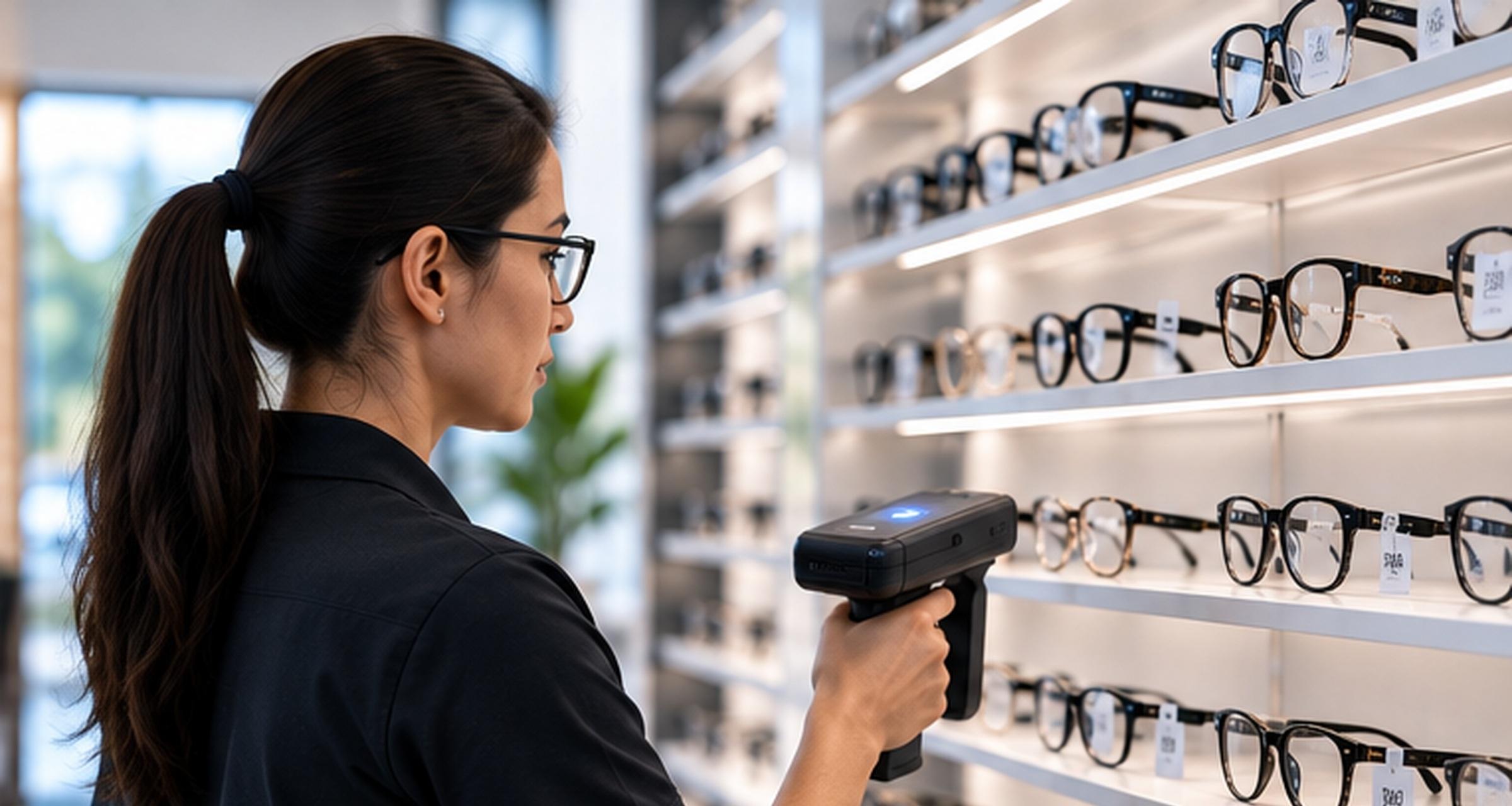
Manual frame counts are time-consuming, prone to human error, and make it easy for frames to go missing. Without accurate inventory, you risk lost sales and overstocking.
- Time-consuming manual counts
- Frames go missing
- Inaccurate inventory records
- Hard to make purchasing decisions
- Rapid RFID-assisted inventory
- Find missing frames quickly
- Real-time inventory visibility
- Smarter purchasing decisions
How it works
A simple loop: tag, scan, reconcile, act.
1. Tag
Assign a unique RFID tag to each frame.
2. Scan
Walk the frame board with a handheld reader.
3. Reconcile
Compare what should be there with what was detected.
4. Act
Find missing frames and resolve inventory issues.
Rapid inventory
From frame-by-frame counting to one continuous sweep.
Scan hundreds or thousands of frames in a fraction of the time. FrameCount instantly shows what was found, what's missing, and highlights any unexpected frames.
See It in ActionDesigned for RFID-assisted inventory. Real-world performance will be validated in pilot testing.
- Found
- 1,243
- Missing
- 4
- Unexpected
- 2
Illustrative sample data
Frame details
Ray-Ban RX5228
Black · 53-17
- Board Location
- A1
- Last Seen
- Today 10:34 AM
Find a frame
Stop searching.
Start narrowing.
Can't find a frame? Use signal strength to zero in on its location. FrameCount helps you find missing frames faster, so you can get them back on the board and in front of your customers.
Inventory intelligence
Turn frame data into decisions.
See what's selling, what's sitting too long, and what to reorder.
All figures shown are illustrative sample data.
- Total Inventory Value
- $186,720
- Frames Sold (30 days)
- 28
- Days Avg. Age
- 87
- Missing Frames
- 4
Built for optical practices
A complete frame lifecycle, in one place.
From receiving new inventory to transfers, returns, and sales, FrameCount helps you track every frame throughout its lifecycle.
- Receive
- Tag
- Inventory
- Transfer
- Sell
- Return

Made for real practices
Modern technology for modern optical offices.
FrameCount combines software, RFID hardware, and a simple workflow designed specifically for optometry practices and optical retailers.
- Easy to use
- Works with your workflow
- Designed for optical
- Multi-location ready
Pilot program
Help build the future of optical inventory.
FrameCount is preparing for real-world pilot testing with optical practices. If your team manages hundreds or thousands of frames, we’d love to work with you.
Apply for PilotFAQ
Common questions
FrameCount is a product concept for optical inventory intelligence — software and RAIN RFID hardware being designed to help optometry practices and optical retailers know exactly what frames they have, where they are, and what to do next. FrameCount is currently in development and not yet commercially available.
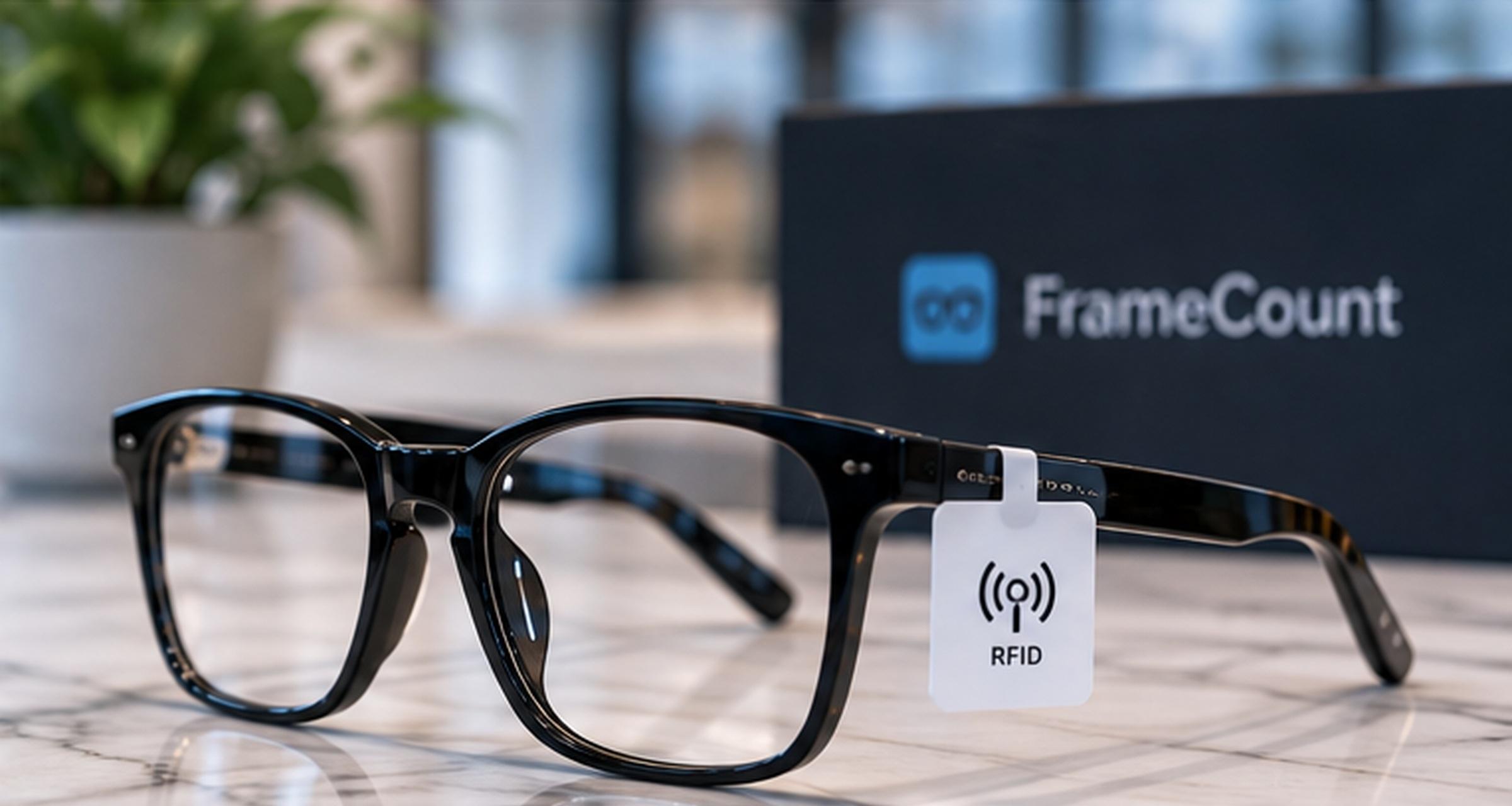
RFID (radio-frequency identification) uses small tags and a reader to identify items wirelessly. FrameCount's architecture is built around passive UHF RAIN RFID tags — a widely used, low-cost tag technology — read with a handheld Bluetooth reader.
No. Unlike a barcode, a passive UHF RFID tag doesn't need to be visually scanned one at a time. A reader can detect many tags within range during a single sweep, which is what makes rapid, full-board counts possible.
We don't have independently validated numbers yet. FrameCount is being designed for rapid full-board counts — our goal is to turn a process that takes hours into one that takes minutes, and our pilot program is intended to measure real-world performance across different optical environments.
Locating an individual tagged frame using reader signal strength is a planned Find capability. It is not yet a verified, shipped feature — we'll update this once it has been tested in real environments.
No. A handheld reader and pre-encoded tags are enough to get started. An RFID printer/encoder is an optional future addition intended for practices doing high volumes of receiving and tagging in-house.
Importing an existing frame catalog and inventory records is part of the onboarding experience we're designing. Specific import formats will be confirmed as we work with pilot practices.
Integrations with practice management, point-of-sale, and vendor catalog systems are planned categories for FrameCount. No specific integration partnerships exist today, and we'll be upfront about which systems are supported as that work happens.